Apr 07 2024
Pauses in Reflection on the Message of the Last Ten Days of Ramadan
By Professor Dr. Ali Muhiyddin Qaradaghi
President of the International Union of Muslim Scholars
Before we bid farewell to this blessed month, I would like to highlight three important messages that Ramadan carries in its final days, directing them towards our hearts, souls, and inner selves, so that we may benefit and learn from them.
First Message:
In these final nights and days, let us devote ourselves to worship with utmost sincerity and dedication, especially since Laylat al-Qadr (the Night of Power) is among them. This blessed and important night offers an opportunity to seize its blessings and rewards through increased worship, reading, reflecting upon, and understanding the Holy Quran. In this regard, there is a significant imbalance in the lives of our dear brothers, where each of them is willing to spend their entire life in long and extensive cycles of prayer, but unwilling to reflect on a ruling or ponder over a verse or a Hadith! This is despite the fact that understanding religion, reflecting on verses, comprehending Hadiths, and listening to scholarly lessons are all religiously mandated; indeed, some are even better than certain types of Sunnah acts! So let us be diligent in contemplation and reflection, just as we are diligent in reciting the Quran and performing prayers. For this, let us rely on the available interpretations and commentaries, and if we encounter something we do not understand, let us refer it to its specialists and ask them: ("So ask the people of the message if you do not know." [Quran 16:43]). This is the last opportunity in this blessed month.
Second Message:
This message is directed to our inner selves. We need to sit with ourselves to reflect upon and understand this great Ramadan message. It is the primary wisdom behind fasting in the month of Ramadan, which Allah Almighty has specified in His saying: ("So that you may become righteous." [Quran 2:183]). Righteousness (Taqwa) means reaching a level of sensitivity to every sin, small or large. This means that whenever you do something, your focus should be on Allah ("Worship Allah as if you see Him"), and if you cannot reach that level, then be certain ("He sees you"). Worship here is comprehensive; in some narrations interpreting Taqwa, it is mentioned as "fearing Allah," and in another, it is mentioned as "working," whatever the work may be: in your institution, in your university, or in your farm with your servants.
We must reach that level of attention and sensitivity, to know how much our fasting has affected us, and how much it has increased our level of righteousness. This is so that all our fasting and night prayers may be accepted with Allah's support. Some scholars have considered the transformation of their inner selves from one state to a better one as a sign of the acceptance of their worship. ("Indeed, Allah will not change the condition of a people until they change what is in themselves." [Quran 13:11]). So, how much do we need this change? May Allah have mercy on us, grant us, elevate us, and make us successful.
At the same time, this change must be internal, not a change in outward form or appearance, because that is not considered in our religion. ("Indeed, Allah does not look at your appearances, bodies, wealth, and possessions, but He looks at your hearts.")
Third Message:
Obligatory acts and Allah's divine laws are not tied to a specific time or only to the month of Ramadan; rather, they are perpetual and constant throughout all stages of life.
For example, performing congregational prayers is not exclusive to the month of Ramadan; rather, it is our duty to continue performing congregational prayers. After Ramadan, our focus should not shift to other things, because a believer worships Allah at every moment. It is not just Ramadan, but rather as the Lord Almighty wishes: ("But be worshippers of the Lord." [Quran 3:79]), but rather, be Rabani (devoted to the Lord).
The month of Ramadan is like a training course, and what we have learned from it and adhered to during this month must continue and extend throughout the entire year. This message is very important; we must be Rabani, rising and sitting only for Allah, firmly established on His path, and following the guidance of His Prophet (peace be upon him). Because our steadfastness after Ramadan in all the things we did during Ramadan is the true fruit of fasting and night prayers. ("Indeed, those who say, "Our Lord is Allah," and then remain steadfast - the angels will descend upon them, [saying], "Do not fear and do not grieve but receive good tidings of Paradise, which you were promised." [Quran 41:30]).
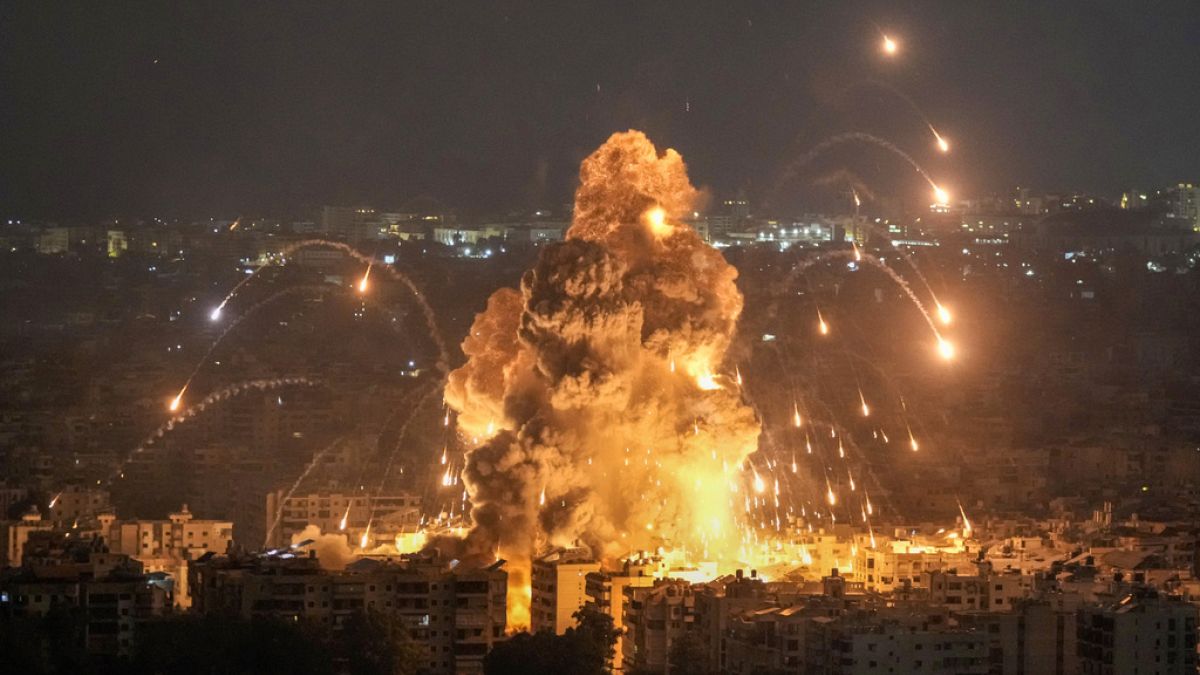
The final message is a message of brotherhood, unity, and a sense of responsibility, responsibility towards one nation (the Islamic nation). Our Prophet (peace be upon him) said: ("The example of the believers in their mutual affection, mercy, and sympathy is like the example of a body; if one member complains, the entire body responds to it with sleeplessness and fever.") Whoever contemplates our Islamic world today, their body will tremble, their heart will ignite, and their eyes will fill with tears, because problems and difficulties have afflicted our Islamic nation from all sides. The condition of our nation is very distressed, in ignorance, poverty, and discrimination, a set of problems that bewilder the wise and make them forget one another. We have forgotten our primary cause, we have forgotten our brothers in Africa, we have forgotten our brothers in Syria, Iraq, and Yemen.
So, O Lord, change our condition to the best of conditions, O Lord of the worlds.